WHAT: As mentioned in Chapter 1 of the EJI, a multidisciplinary team is made up of professionals from various areas, who have different skills, tools and experiences, who works together to achieve a common goal. They are characterized by sharing knowledge and carrying out an integral task. The results obtained from these groups are much more satisfactory than individual works.
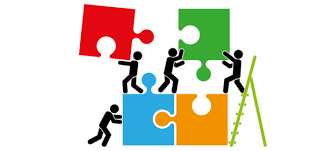
SO WHAT: A multidisciplinary team is made up of several specialists from different areas. But usually there is only one specialist in each work area. Because of this, an environment is generated where trust is a key piece for the operation of the team. If a person in a particular area does not have deep knowledge about another, he will trust the most about what the team does, obtaining an optimal work environment and the objectives of the team can be carried out.
Each specialist manages a unique language, which he learned throughout his training, which may or may not coincide with other work areas. That is why you must have the ability to express a message or idea that is understood by all team members and anyone involved. For example, in the field of health, in the Leonard paper, is concluded that effective communication and teamwork are essential to provide high quality and safe medical care.
NOW WHAT: As a future agriculture engeneer, my wishes are to produce food and research. And to carry out both projects, it is necessary to work in multidisciplinary teams, where there are people in charge of the social, economic and technical fields, such as accountants, economists, veterinarians and different types of engineers. In these types of teams trust is central, since for each area there is only one person in charge of it, which the whole team trusts in it, who will do things in the best possible way, with dedication, responsibility and commitment , like him with the other areas of the team.
In addition, another very important point is communication within the team, given that each specialist has a special or very technical language, which may not be understood by another area. So it is necessary to carry a clear and understandable message for all team members, thus trying to ensure that the message is correctly interpreted and there are no doubts or misunderstandings. On the other hand, to be able to share clear opinions, allows to make better decisions, as they say in the scientific article of Ruhstaller, a decision resulting from a multidisciplinary discussion is more precise and effective than the sum of all individual opinions.
References:
Ruhstaller, T., Roe, H., Thürlimann, B., & Nicoll, J. J. (2006). The multidisciplinary meeting: an indispensable aid to communication between different specialities. European journal of cancer, 42(15), 2459-2462.
Leonard, M., Graham, S., & Bonacum, D. (2004). The human factor: the critical importance of effective teamwork and communication in providing safe care. BMJ Quality & Safety, 13(suppl 1), i85-i90.
U.S. Department of Justice. 950 Pennsylvania Avenue, NW. Washington, DC 20530-0001. Elder Justice Initiative (EJI). INTRODUCTION TO MULTIDISCIPLINARY TEAMS.
 alce3304-agus